Style Guide
How to Dress for Your Body Type
Knowing how to dress for your body type makes getting dressed easier and more confident. This complete style guide covers every female and male body type — with outfit tips, best clothing styles, wedding dress guidance, plus size advice, and practical fashion tips for every proportion.
Find Your Body Type First
Not sure what your body type is? Use the free calculator to find out from your measurements in seconds.
Why It Matters
Why Dressing for Your Body Type Works
Dressing for your body type is not about hiding your shape or conforming to an ideal. It is about understanding your proportions so you can choose clothes that fit well, feel comfortable, and make you feel confident. Here are the core principles.
Balance your proportions
Most body type dressing strategies work by creating visual balance between the upper and lower body. If one area is more prominent, clothing can create the impression of more even proportions — through color, volume, structure, or cut.
Highlight your favorite features
Every body type has features worth highlighting. Hourglass bodies have a defined waist. Pear bodies have a defined waist and shapely legs. Inverted triangle bodies have strong shoulders. Dressing for your body type means emphasizing what you love.
Rules are guidelines, not laws
Body type dressing advice is a starting point, not a strict rulebook. Personal style, comfort, age, occasion, and individual preference all matter more than any style rule. Use these tips as a guide, then wear what makes you feel good.
Hourglass Body Type
How to Dress for an Hourglass Body Type
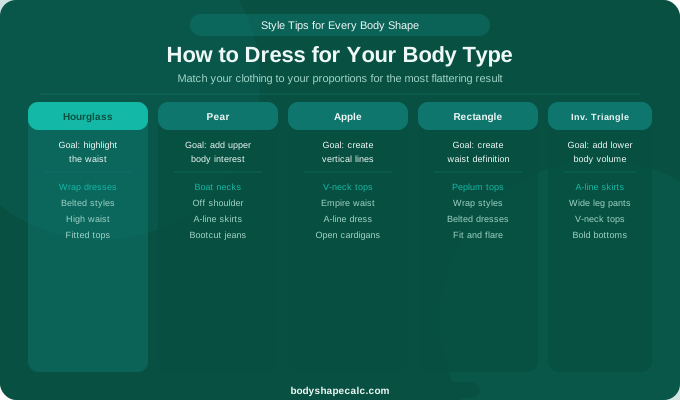
The main goal for dressing an hourglass body type is to maintain the natural balance between bust and hips while highlighting the defined waist — the most distinctive hourglass feature.
Best styles for hourglass
Wrap dresses and wrap tops naturally follow hourglass curves. Fitted tops and body-skimming fabrics highlight the waist. High-waist jeans and skirts emphasize the natural waist. Belted styles at the natural waist are always effective. V-necks and scoop necks draw attention to the décolletage.
What to avoid for hourglass
Very boxy or oversized pieces hide the waist and the defining hourglass feature. Avoid shapeless tops and dresses that remove waist definition completely — unless that is your personal preference. Volume at the bust AND hips simultaneously can look unbalanced.
Wedding dress for hourglass
Fit-and-flare and mermaid silhouettes are the most flattering wedding dress styles for hourglass body types — they follow the body's natural shape. Belted or sashed dresses and sheath dresses with a defined waist seam also work well. Most styles work for hourglass because proportions are already balanced.
Plus size hourglass dressing
The same principles apply for plus size hourglass — maintain waist definition and keep upper and lower body balanced. Wrap dresses and belted styles are especially effective at plus size. Look for stretch fabric that follows the body's natural curves without being too tight.
Pear Body Type
How to Dress for a Pear Body Type
The main goal for dressing a pear body type is to balance wider hips by adding visual interest and structure to the upper body.
Best styles for pear
Bright or patterned tops draw the eye upward. Boat neck, square neck, and off-shoulder styles add visual width at the shoulders. Structured blazers and cropped jackets add upper-body definition. A-line skirts and fit-and-flare dresses skim over hips. Bootcut and wide-leg jeans balance hip width.
What to avoid for pear
Avoid very tight, light-colored bottoms that emphasize wider hips. Heavy pockets, embellishments, or loud patterns at hip level add more visual weight where you already have it. Very boxy tops that hide the waist also make proportions look more bottom-heavy.
Wedding dress for pear
A-line and ball gown wedding dresses are the most flattering for pear body types — they flare from the waist and skim over the hips. Fit-and-flare styles also work well. A structured bodice with an open, full skirt balances pear proportions beautifully. Avoid very fitted skirts that cling to the hip area.
Prom dress for pear
A-line and fit-and-flare prom dresses work best for pear body types. A strapless or embellished bodice with a full skirt creates beautiful balance. High-low hemlines that are shorter at the front and longer at the back show off legs while skimming hips. Avoid very fitted column or sheath prom dresses.
Apple Body Type
How to Dress for an Apple Body Type
The main goal for dressing an apple body type is to create a lengthening vertical line, skim the midsection, and draw attention to the neckline and legs.
Best styles for apple
V-neck tops and deep scoop necks create vertical lines. Empire waist dresses fall straight from below the bust, skimming the waist. Open-front cardigans and longline jackets create lengthening vertical lines. High-rise straight-leg jeans provide a smooth silhouette. Show off slim legs with interesting hemlines and footwear.
What to avoid for apple
Avoid clingy fabrics that cling to the midsection. Very boxy styles can add bulk. Very low-rise bottoms that sit at the widest waist point are uncomfortable and unflattering. Belts exactly at the widest waist point can emphasize it rather than define it.
Wedding dress for apple
Empire waist and A-line wedding dresses are ideal for apple body types — they fall away from the waist and create a smooth, elegant silhouette. V-necklines and sweetheart necklines elongate the upper body. Ball gowns also work well. Avoid fitted mermaid and sheath dresses that cling at the midsection.
Plus size apple dressing
Plus size apple shapes benefit most from V-necks, empire waist styles, A-line dresses, and wrap tops that skim rather than cling. Stretchy, comfortable fabrics that drape smoothly are ideal. Avoid very stiff structured fabrics that gap at buttons, and very thin clingy fabrics.
Rectangle Body Type
How to Dress for a Rectangle Body Type
The main goal for dressing a rectangle body type is to create waist definition and add visual curves — or to lean into the clean straight silhouette with structured, polished looks.
Best styles for rectangle
Wrap tops, peplum tops, and belted styles create waist definition. High-waist bottoms with tucked-in tops create a visual waistline. Fit-and-flare dresses add curves. Structured blazers and tailored jackets look sharp on straight proportions. Volume at the bust or hips adds dimension. Prints and textures add visual interest.
What to avoid for rectangle
Very boxy, shapeless outfits that follow the straight silhouette without any definition can look unstructured. If you want to create curves, avoid pieces that add no waist definition at all. However, if you prefer a minimalist, structural look, straight-cut clothing suits rectangle shapes very well.
Wedding dress for rectangle
Fit-and-flare, A-line, and ballgown wedding dresses add curves. Dresses with a ruched waist or defined waist seam create definition. A corset bodice gives the illusion of a more defined waist. Avoid straight column dresses that follow the straight silhouette without adding any shape.
Casual dressing for rectangle
For casual looks, high-waist jeans with a tucked-in top is the simplest and most effective rectangle styling trick. A belt over a shirt or dress instantly adds waist definition. Wide-leg trousers with a crop top create a fashionable silhouette with defined waist.
Inverted Triangle Body Type
How to Dress for an Inverted Triangle Body Type
The main goal for dressing an inverted triangle body type is to soften the upper-body line and add visual volume to the hips and lower body.
Best styles for inverted triangle
V-necks, wrap tops, and halter necks draw the eye down and away from broad shoulders. A-line skirts, wide-leg pants, and flared jeans add lower-body volume. Fit-and-flare dresses create balance. Dark simple tops with lighter or patterned bottoms shift visual focus downward. Belts at the waist create a transition point.
What to avoid for inverted triangle
Avoid shoulder pads, puff sleeves, wide boat necks, and off-shoulder styles that add horizontal width at the shoulder line. Very tight skinny jeans make narrow hips look even narrower relative to broad shoulders. Avoid tops with heavy embellishment at the shoulder or bust area.
Wedding dress for inverted triangle
A-line, ball gown, and fit-and-flare wedding dresses add hip volume and create a balanced silhouette. V-neck and sweetheart necklines draw the eye downward. Dresses with volume or embellishment below the waist are ideal. Avoid off-shoulder and wide-strap styles that emphasize shoulder width.
Men — inverted triangle dressing
For men with an inverted triangle body type (V-taper), fitted shirts that follow the shoulder-to-waist taper look athletic and sharp. Straight-cut trousers balance the silhouette. Avoid very baggy bottoms that make the upper body look even more dominant relative to narrow hips.
Men's Body Type Dressing
How to Dress for Your Body Type — Men
Male body type dressing follows similar proportion principles to women's — create balance and highlight your best features. Here is a guide for the main male body types.
Inverted Triangle / Athletic
Fitted shirts that taper at the waist highlight the V-taper. Slim-fit or straight-cut trousers. Avoid very baggy bottoms or oversized tops that hide the athletic build. Suit jackets with structured shoulders and defined waist look excellent.
Rectangle / Trapezoid
Structured jackets add shoulder definition. Fitted shirts tucked into tailored trousers create waist definition. Horizontal stripes and chest pockets add visual width. Avoid very oversized clothing that makes proportions look undefined.
Apple / Oval
Vertical stripes and V-neck shirts create lengthening lines. Well-fitted shirts that do not pull or gap at the buttons. Straight-cut trousers with a comfortable waist. Avoid horizontal stripes across the midsection and very tight waistbands.
Plus Size
How to Dress for Your Body Type — Plus Size
All body type dressing principles apply equally for plus size women. The same proportion strategies work at every size. Here are the most important plus size body type dressing tips.
Focus on fit, not size
The most important principle for plus size dressing is fit. A well-fitted garment in a larger size will always look better than an ill-fitting garment in a smaller size. Avoid wearing clothing that is too small or too large for your measurements. If needed, tailor key pieces for the best fit.
Use the same proportion principles
The proportion principles for each body type work at all sizes. Plus size pear shapes still benefit from upper-body interest and A-line bottoms. Plus size apple shapes still benefit from V-necks and empire waist styles. Plus size hourglass shapes still benefit from wrap styles and waist definition.
Fabrics matter more at plus size
At plus sizes, fabric choice is especially important. Jersey, ponte, and draped fabrics that move with the body work better than very stiff structured fabrics that gap or very thin clingy fabrics that show every contour. Medium-weight stretch fabrics are the most versatile for plus size dressing.
Wear what makes you feel confident
Style rules are guidelines, not requirements. The most important factor in how you dress is whether you feel comfortable and confident. If a style breaks the "rules" for your body type but you love it — wear it. Confidence always looks better than following rules you do not enjoy.
Age & Body Type
How to Dress for Your Body Type and Age
Body proportions can change with age. Here are the key things to consider when dressing for both your body type and your age.
Body shape can change with age
Many women find their body shape shifts over time — particularly after pregnancy, menopause, or significant weight changes. A woman who was a pear shape in her twenties may find more apple-like proportions developing in midlife as fat distribution shifts to the midsection. Recalculate your body shape if your proportions change significantly.
Dressing for body type in midlife
In midlife, comfort and quality become more important. Well-fitted, quality fabrics in flattering cuts suit most body types regardless of age. The proportion principles remain the same — what changes is preference for more comfortable fabrics, modest hemlines, and elegant cuts over trend-driven styles. Know your body type and dress for your current proportions, not your shape from ten years ago.
Outfit Guides
Complete Outfit Guides for Every Body Type
Hourglass Outfit Guide
Detailed outfit ideas for hourglass body type — wrap dresses, fitted tops, high-waist jeans, and more.
Pear Outfit Guide
Outfit ideas for pear body type — A-line skirts, bootcut jeans, boat neck tops, and balance strategies.
Apple Outfit Guide
Outfit ideas for apple body type — empire dresses, V-neck tops, open cardigans, wide-leg trousers.
Rectangle Outfit Guide
Outfit ideas for rectangle body type — peplum tops, belted dresses, high-waist jeans, wrap styles.
Inverted Triangle Guide
Outfit ideas for inverted triangle — A-line skirts, wide-leg pants, V-neck tops, lower-body balance.
Different Body Types for Women
The difference between body type and body shape — ectomorph, mesomorph, endomorph.
All Body Shapes for Women
Overview of all 7 female body shapes with measurements, charts, and style summaries.
FAQ
How to Dress for Your Body Type — FAQs
How do I find out what body type I am?
Measure your bust, waist, high hip, and hips with a soft tape measure. Enter the measurements into the free body shape calculator on this site for an instant result. Once you know your body type, use the relevant style guide on this page.
How do I dress for an hourglass body type?
For hourglass: maintain waist definition with wrap tops, belted styles, and fitted clothing. Keep upper and lower body volume balanced. High-waist jeans, wrap dresses, V-necks, and body-skimming fabrics work well. Avoid very boxy styles that hide the waist.
How do I dress for a pear body type?
For pear: add upper-body interest with bright tops, structured shoulders, boat necks, and embellishments. Keep bottoms simple and dark. A-line skirts, bootcut jeans, wrap dresses, and fit-and-flare styles work well. Avoid tight light-colored bottoms with plain dark tops.
How do I dress for an apple body type?
For apple: create vertical lines with V-necks and open cardigans. Use empire waist and A-line silhouettes that skim the midsection. Highlight legs and neckline. High-rise straight-leg jeans, wrap tops, and empire dresses are ideal. Avoid clingy midsection fabrics.
How do I dress for a rectangle body type?
For rectangle: create waist definition with wrap tops, belted styles, peplum tops, and high-waist bottoms with tucked-in tops. Fit-and-flare dresses add curves. Volume at the bust or hips adds dimension. Rectangle shapes are versatile — most styles work when waist definition is created.
How do I dress for an inverted triangle body type?
For inverted triangle: streamline the upper body with V-necks, wrap tops, and halter necks. Add lower-body volume with A-line skirts, wide-leg pants, and flared jeans. Dark simple tops with lighter or patterned bottoms shift focus downward. Avoid boat necks and off-shoulder styles.
How do I dress for my body type plus size?
The same proportion principles apply at every size. Focus on fit above all — well-fitted clothing in your actual size always looks better than clothing that is too small or too large. Use medium-weight stretch fabrics. Apply the relevant body type tips for your shape and prioritize comfort and confidence.
How do I dress for my body type and age?
Body shape can change with age — especially around menopause when fat distribution shifts. Recalculate your body type if your proportions change. In midlife, prioritize well-fitted, quality fabrics and elegant cuts. The proportion principles remain the same regardless of age — dress for your current measurements and proportions.
How do I choose a wedding dress for my body type?
Hourglass: fit-and-flare, mermaid, or belted dresses. Pear: A-line or ball gown. Apple: empire waist or A-line. Rectangle: fit-and-flare or ruched waist. Inverted triangle: A-line or ball gown with V-neck. The general rule is to choose a silhouette that creates balance between your upper and lower body.
How do I dress for my body type as a man?
For men — inverted triangle (V-taper): fitted shirts that taper at waist, straight-cut trousers. Rectangle: structured jackets, fitted shirts, horizontal chest details. Apple/oval: vertical stripes, V-neck shirts, well-fitted straight trousers. The same principle applies: create visual balance between upper and lower body.