Measurement Guide
How to Measure Waist and Hips
Waist and hip measurements together are used for body shape calculation, waist-to-hip ratio, pants and jeans sizing, dress size, and body fat estimates. This complete guide covers how to measure waist and hips correctly — for men and women, in inches or centimeters.
Waist & Hip Measurements
Core measurements for body shape, WHR, clothing size, and body fat calculations.
What You Need
Before You Start
Measuring your waist and hips takes only a few minutes. Here is what you need and how to prepare.
Flexible tape measure
Use a soft cloth or flexible plastic measuring tape — the kind used for sewing or body measurements. Metal or rigid tapes will not wrap around body curves properly. Most measuring tapes show both inches and centimeters.
Thin or no clothing
Measure over underwear or a thin fitted top. Remove jeans, thick trousers, belts, and bulky clothing before measuring. Extra fabric adds width and gives an inaccurate reading.
A mirror or helper
A full-length mirror helps you check that the tape stays level all the way around. Alternatively, ask someone to help hold the tape at the back — this is the easiest way to get accurate hip measurements.
Measurement Points
Waist, High Hip, and Hips — What Is the Difference?
There are three different lower-body measurement points. Understanding the difference between them is important for accurate body shape results.
Waist
Your natural waist is the narrowest part of your torso — usually 1–2 inches above your belly button. This is where waist measurement is taken for body shape, dress size, skirt size, and waist-to-hip ratio. It is not the same as your pants waist size.
High Hip
Your high hip is measured about 3–4 inches below your natural waist — above the fullest hip point. It captures the hip shelf area. The high hip measurement is what distinguishes spoon body shape from pear body shape in body calculators that include this measurement.
Full Hips
Your full hip measurement is taken at the widest point of your hips and seat — usually 7–9 inches below the natural waist. This is the measurement most people refer to when they say "hip measurement." It is the key measurement for body shape, waist-to-hip ratio, and clothing size.
Step by Step
How to Measure Waist and Hips — Step by Step
Follow these steps to measure your waist and hips accurately in one session. Use the same unit throughout — all measurements in inches or all in centimeters.
Step 1 — Prepare
Wear underwear or a thin fitted top. Remove belts, heavy trousers, and bulky clothing. Stand in front of a mirror if possible. Have your tape measure ready and note whether you are measuring in inches or centimeters.
Step 2 — Measure your waist
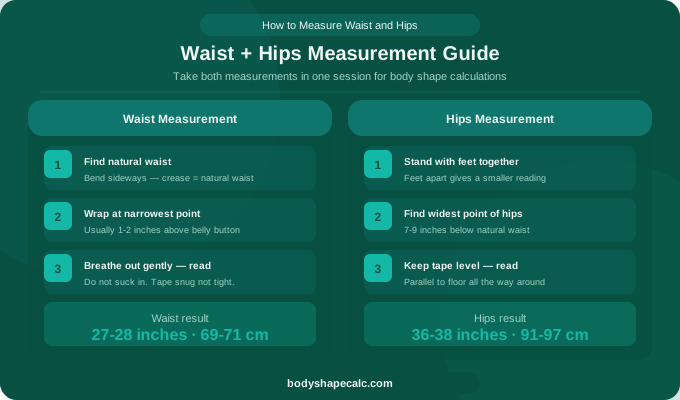
Find your natural waist by bending slightly to one side — the crease that forms is your natural waist. Wrap the tape around this narrowest point, keeping it level and parallel to the floor. Breathe out gently and read the measurement without sucking in your stomach. Record this number.
Step 3 — Measure your high hip (optional but recommended)
Move the tape down about 3–4 inches below your natural waist. Wrap it around at this point — above the fullest hip area. Keep it level. This is your high hip measurement. It is optional but significantly improves body shape accuracy, especially for identifying spoon body shape.
Step 4 — Measure your full hips
Move the tape to the fullest part of your hips and seat — usually 7–9 inches below your natural waist. Stand with feet together. Wrap the tape all the way around, keeping it level and parallel to the floor. The tape should be snug but not tight. Read and record this number.
Step 5 — Measure bust (for full body shape)
For a complete body shape calculation, also measure your bust or chest at the fullest point. Wrap the tape around the fullest part of your chest, keeping it level. For women, measure in a well-fitted, non-padded bra or no bra for the most accurate reading.
Step 6 — Record all measurements
Write down all measurements: bust, waist, high hip (if measured), and full hips — all in the same unit. Enter them into the body shape calculator below for an instant body shape result, or use them for clothing size, WHR, or body fat calculations.
No Tape Measure?
How to Measure Waist and Hips Without a Measuring Tape
If you do not have a soft measuring tape, here are alternatives that work.
String or ribbon method
Use a non-stretchy piece of string, ribbon, or cord. Wrap it around your natural waist, mark where it meets with a pen or clip. Then lay it flat on a hard surface and measure with a ruler. Repeat for hips. This gives accurate circumference measurements without a tape measure.
Existing clothing method
If you have a well-fitting pair of trousers or jeans, the label waist size is a rough guide — add 1–2 inches for your actual body waist. For hips, lay a well-fitting pair of trousers flat, measure across the widest hip point, and double it. These are estimates only — use a tape or string for precise measurements.
What Are They Used For?
How to Use Waist and Hip Measurements
Your waist and hip measurements are used differently for different purposes. Here is a guide for each common use.
Body Shape Calculation
Enter bust, waist, high hip, and full hip measurements into the body shape calculator. Use your natural waist (narrowest point) for this. All measurements must be in the same unit. The calculator compares ratios to identify your body shape — hourglass, pear, apple, rectangle, spoon, inverted triangle, or triangle.
Waist-to-Hip Ratio (WHR)
Divide your natural waist measurement by your full hip measurement. This gives your WHR. For women, a WHR below 0.80 is in the lower range; 0.85+ is higher. For men, below 0.90 is lower; 1.00+ is higher. Use the same unit for both measurements.
Pants and Jeans Sizing
For pants, use the waist measurement at the point where the waistband will sit — often at or just below the natural waist. For hip-fit pants, compare your full hip measurement with the brand's size chart. Most pants size charts show both waist and hip measurements for each size.
Dress and Skirt Sizing
For dresses, use your natural waist and full hip measurements alongside bust. Compare all three with the brand's size chart — size for the largest measurement and tailor the rest if needed. For A-line and full skirts, the hip measurement is most important.
Body Fat Estimate
The US Navy tape-measure body fat formula uses waist and hips (for women) alongside neck and height. Women measure waist at the natural waist and hips at the fullest point. Men measure waist at the navel level. Enter these into the body measurement calculator for a body fat estimate.
Bust, Waist, and Hips Together
For a complete body measurement profile, measure bust (fullest chest), waist (natural waist), high hip (3–4 inches below waist), and full hips (fullest seat). These four measurements give the most accurate body shape result and cover all major clothing size calculations.
Men vs Women
How to Measure Waist and Hips for Men and Women
The technique is the same but the reference points and typical proportions differ between men and women.
Women — Waist and Hips
For women, measure the natural waist (narrowest point, usually above the belly button) and the full hips (widest point of hips and seat). Adding the high hip measurement gives the most accurate body shape result for women. The waist-to-hip difference is typically more pronounced in women, making these measurements central to body shape identification.
Men — Waist and Hips
For men, measure the natural waist or trouser waist (at or just below the natural waist) and the full hips (widest point). For body fat using the Navy method, men measure the waist at the navel rather than the narrowest point. Hip measurements in men are typically closer to the waist measurement than in women, making the waist-to-hip difference less pronounced.
Common Mistakes
Waist and Hip Measurement Mistakes to Avoid
Measuring hips at the wrong height
Hip measurement should be at the fullest point — usually 7–9 inches below the natural waist. Measuring too high (at the high hip) gives a smaller number; measuring too low misses the fullest point. Always find the widest point before wrapping the tape.
Confusing high hip and full hip
High hip (3–4 inches below waist) and full hip (fullest point, 7–9 inches below waist) are different measurements. Body shape calculators that ask for "high hip" and "hip" need both. Do not enter the same measurement for both fields.
Tape not level at the back
The tape must stay level — parallel to the floor — all the way around. If it dips at the back, your hip measurement will be smaller than it should be. Use a mirror to check, or ask someone to hold the tape at the back.
Mixing units
Never mix inches and centimeters in the same calculation. If you measure waist in inches, measure hips in inches too. Mixing units gives completely incorrect ratios and body shape results.
Using pants size as body measurement
Your pants waist size is typically 1–2 inches smaller than your actual body waist. Never use your clothing label size as your body measurement for body shape calculations.
Measuring with feet apart
For hip measurements, stand with feet together. Standing with feet apart changes the hip shape and gives a smaller reading. Keep feet together and stand naturally for an accurate hip circumference.
Use Your Measurements
What to Do With Your Waist and Hip Measurements
Body Shape Calculator
Enter bust, waist, high hip, and hips to find your body shape — hourglass, pear, apple, rectangle, spoon, inverted triangle, or triangle.
Waist to Hip Ratio Calculator
Calculate your WHR from waist and hip measurements with a full reference chart for men and women.
How to Measure Bust
Step by step guide to measuring your bust correctly at home.
Body Measurement Calculator
Full tool — enter all measurements for BMI, WHR, body fat estimate, and body shape result.
How to Measure Waist
Detailed guide focused specifically on waist measurement — natural waist, pants waist, belt size, and more.
How to Measure Hips
Dedicated guide to hip measurement — full hips, high hip, and how they differ.
How to Measure shoulders
This step-by-step guide explains how to measure shoulder width correctly for both women and men using either inches or centimeters..
Dress Size Calculator
Use bust, waist, and hip measurements to estimate US, UK, and EU dress size.
Body Measurements Chart
Standard size guide for women and men.
FAQ
How to Measure Waist and Hips — Frequently Asked Questions
How do I measure my waist and hips?
For waist: wrap a soft tape measure around the narrowest point of your torso — usually 1–2 inches above your belly button. Breathe out gently and read the number. For hips: wrap the tape around the fullest part of your hips and seat — usually 7–9 inches below your natural waist. Stand with feet together and keep the tape level.
How do I measure bust, waist, and hips together?
Measure bust at the fullest chest point, waist at the natural narrowest point, and hips at the fullest seat point. For complete body shape accuracy, also measure the high hip (3–4 inches below waist). Use the same unit for all measurements and record each number before moving to the next.
How do I measure waist and hips for pants?
For pants, measure waist where the waistband will sit (at or just below natural waist) and hips at the fullest seat point. Compare both with the brand's size chart. Most pants size charts list both waist and hip measurements for each size. Size for whichever measurement is larger.
How do I measure waist and hips for jeans?
Measure your waist at the natural narrowest point and hips at the fullest seat point. For jeans sizing, your body waist measurement is typically 1–2 inches larger than your jeans size. Compare with the specific brand's size chart for the most accurate result.
What is the difference between high hip and full hip measurement?
High hip is measured 3–4 inches below the natural waist — above the fullest hip point. Full hip is measured at the widest point of the hips and seat — usually 7–9 inches below the natural waist. They are at different heights and give different numbers. Body shape calculators may ask for both.
How do I measure waist and hips without a measuring tape?
Use a non-stretchy piece of string or ribbon. Wrap it around your natural waist, mark where it meets, then measure the string against a ruler. Repeat for hips at the fullest point. This gives accurate circumference measurements without a tape measure.
How do I measure waist and hips for body fat?
For the US Navy body fat formula: women measure waist at the natural narrowest point and hips at the fullest point. Men measure waist at the navel level. Also measure neck circumference. Enter all values plus height into the body measurement calculator for a body fat estimate.
How do I measure waist and hips for a dress?
Measure natural waist (narrowest point) and full hips (widest point). Also measure bust. Compare all three with the dress brand's size chart. For fitted dresses, size for the largest measurement and alter the rest. For A-line and flowy styles, hip measurement is most critical.
How do I measure hips and waist for men?
For men, measure waist at the natural narrowest point or at trouser level. Measure hips at the fullest point of the seat. For body fat using the Navy method, men measure waist at the navel level specifically. Use the same unit for both measurements.
Should I use inches or centimeters?
Use whichever unit you prefer — both work. The most important rule is consistency: use the same unit for every measurement in the same calculation. Never mix inches and centimeters. Most body shape calculators and clothing size charts accept both units.